Coliving in Montseny: A 14th Century Masia in a UNESCO Biosphere Reserve
May 7, 2026
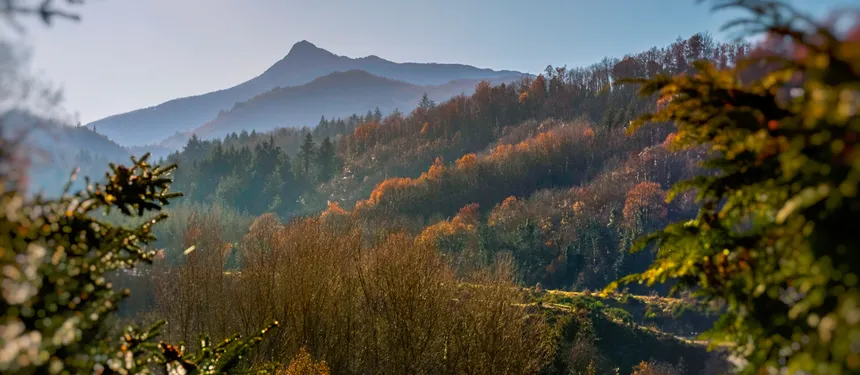
If you have never heard of Montseny, that is fine, neither had we until we lived here for a year and decided we were not leaving.
Montseny is a natural park in Catalonia, about an hour north of Barcelona by car, an hour by train, and roughly the size of a small principality (300 square kilometres of mountains, oak forest, stone villages, and a quietness that is unusual this close to a major European city). It is a UNESCO Biosphere Reserve, has been since 1978, which means the United Nations agreed in writing that the place is special and should stay that way. Wonder House sits inside this park, and "coliving in Montseny" is not a marketing phrase here, it is the actual postal address.
This article is a guide to what coliving in Montseny means in practice. The forest, the fibre internet (yes, both), the seasons, the rhythm of a remote-work week, the trails that start at the door, and what makes this specific corner of Catalonia different from the rural coliving in Spain you might find elsewhere on the map.
Where Montseny actually is
Open a map of Catalonia. Find Barcelona. Slide your finger an hour north along the AP-7 motorway. The first big green patch you see is Montseny.
The park spans three counties (Vallès Oriental, Osona, La Selva) and contains the highest peak of the Catalan pre-coastal range, Turó de l'Home, at 1,706 metres. The terrain ranges from Mediterranean oak forest at lower altitudes to beech and fir at the top, which means you can walk through what feels like four different countries in the space of a single afternoon. The villages inside the park (Montseny, Seva, Sant Esteve de Palautordera, Riells del Montseny, Aiguafreda) have populations measured in hundreds, sometimes tens, and most of them have at least one bakery, one bar, and a dog who will follow you on a hike.
Distances from Wonder House:
- Barcelona El Prat airport: 60 minutes by car
- Girona Costa Brava airport (Ryanair hub): 30 to 40 minutes by car
- Hostalric train station (direct Rodalies trains from Barcelona Sants): 15 minutes by car, we do pickups
- Mediterranean coast (Costa Brava): 30 to 40 minutes
- Pyrenees ski resorts: 90 minutes
- Centre of Girona old town: 35 minutes
This combination, this specific set of doors leading out of one front door, is what makes Montseny work as a coliving base. You are deep enough in nature to actually be in nature, and close enough to two airports and one of Europe's great cities to never feel stranded.
What "Biosphere Reserve" actually means in daily life
UNESCO Biosphere Reserves are protected areas where conservation and human activity are designed to coexist. Montseny was one of the first declared in Spain, in 1978. Practically, that means:
- Forest cover is protected and growing. Oak (alzina), beech (faig), chestnut (castanyer), and pine across most elevations. Roughly 80 percent of the park is forested
- Wildlife is genuinely present. Wild boar are common (you will hear them at night), red squirrels live in the chestnut groves, salamanders appear on damp paths, and the park hosts breeding raptors including golden eagles
- Land use is restricted. No new resorts. No mass-tourism developments. Building new structures is heavily regulated; existing masias (traditional Catalan farmhouses) can be restored but rarely expanded. This is why the park feels old. It is, by design, allowed to stay old
- Local agriculture continues. Chestnut harvest in October, mushroom foraging in autumn (a serious local tradition with a well-defined etiquette), olive oil production at lower altitudes
- Traffic is light. The roads are narrow, winding, and signposted with cyclists and slow-moving tractors more often than rush-hour columns
This is the reason the silence holds. You are inside a place that is structurally not allowed to become noisy.
What coliving in Montseny looks like, day to day
Most colivers we host fall into a similar rhythm within the first week.
Mornings start with light, not alarms. The masia faces east, the forest filters the sunrise, and you wake up at 7am or 7:30am without trying. Coffee in the kitchen, often someone else already there.
Deep work runs from around 9am to 1pm. The dedicated coworking room has 100 Mbps fibre, ergonomic chairs, monitor arms, and a window that looks into oak canopy. Spanish rural broadband has improved dramatically in the last five years thanks to EU connectivity programmes (UNICO, Plan de Recuperación), and Montseny sits in one of the well-served corridors. Video calls are reliable. Large uploads do not sigh.
Lunch is communal more often than not. Catalans do lunch as the main meal of the day, between 1:30 and 3pm. Most colivers absorb this rhythm, and it is the right rhythm for remote work (heavy meal early, lighter dinner late, better sleep).
Afternoon: more work, or a hike. A hiking trail leaves the front gate. A waterfall (Salt de Sant Bernat) is reachable in 90 minutes round trip. Turó de l'Home is a half-day climb. Several colivers split the day: deep work in the morning, lighter shallow tasks in the afternoon while walking, calls at sunset.
Evenings rotate. Themed dinners Monday to Friday (small extra fee), cooked by a rotating crew of guests, often someone showing off a recipe from their home country. Friday is usually a longer dinner. Sometimes a board game evening turns into 1am. Sometimes an early night and a 6am yoga session for the disciplined among us.
Weekends pull two ways. Costa Brava coast for one half (Calella de Palafrugell, Tossa de Mar, Sa Tuna), Girona old town for the other. Or further: Cadaqués for a Dalí pilgrimage, the Pyrenees for skiing in winter, Barcelona for a city night.
This is the rhythm. It settles in fast, and people who stay one month often extend twice.
The masia: why a 14th century farmhouse changes the experience
A masia is a specific type of Catalan rural farmhouse, traditionally housing an extended family plus livestock plus the year's grain and oil supplies under one stone roof. They are built around a central courtyard, with thick stone walls, small windows, and rooms that have been added across centuries.
Wonder House occupies one such masia, with confirmed structures dating to the 14th century, with extensions through the 17th and 19th centuries. Roughly 800 m² of interior space, walls of local sandstone, original wooden beams in many rooms, and a fireplace in the living room that genuinely earns its keep through Catalan winters.
What this gives you, that a purpose-built coliving cannot:
- Acoustic isolation. Stone walls, half a metre thick. Rooms feel quiet in a way that feels physical
- Thermal mass. Cool in summer, slow to lose heat in winter. The masia's stone soaks up daytime warmth and releases it at night
- A sense of layered time. The architecture has been added to by twenty generations. It is not a hotel pretending to feel old. It is old, and the structure tells you so
- Distinct character per room. No two are identical. Some have the original beams exposed, some look out into chestnut groves, some have window seats deep enough to read a book in
- Garden and grounds. A natural pool, a wild garden, two barbecue areas, a cinema room (we converted an old storage barn), a gym, and a "forbidden room" we all pretend doesn't exist
The masia is the part of coliving in Montseny we are quietly proudest of. Not because it is fancy (it isn't, deliberately), but because it is real.
Seasons in Montseny
Worth knowing if you are planning a stay.
Spring (March to May). Greenest version of the park, wildflowers, mild weather, fewer tourists. Hiking is at its best. Wi-Fi works the same as always. Our personal favourite season.Summer (June to August). Warm but not coastal-Spain hot, because the altitude (the masia sits at around 700m) keeps temperatures lower than Barcelona by 4 to 6 degrees. Long evenings, garden dinners, a fully-functioning natural pool, a busy guest calendar. The most social season.
Autumn (September to November). Mushroom and chestnut season, cooler nights, fog rolling through the valley most mornings. Catalan locals consider this the most beautiful time of year, and we agree. Quieter house, better focus, fireplace starts being lit in late October.
Winter (December to February). Underrated. Cold nights but sunny most days, snow occasionally on the higher peaks, a dramatically quieter park. The fireplace becomes the centre of social life. Some colivers come specifically for winter because deep work feels easiest when the world outside is hibernating.
There is no bad season for coliving in Montseny. There are different versions of the same place.
Getting here
- From Barcelona airport (BCN): rent a car or take Aerobús to Sants station, then Rodalies R2 line to Hostalric. We pick you up. About 90 minutes door to door
- From Girona airport (GRO): Ryanair's main Spanish base, often a cheaper option from elsewhere in Europe. Taxi or rental to Hostalric, 25 minutes. We pick you up. About an hour door to door
- Directly by train from elsewhere in Spain: AVE high-speed to Barcelona Sants, then Rodalies R2 to Hostalric. From Madrid, around 4 hours total. From Sevilla, 7 hours. From Valencia, 4 hours
- By car: AP-7 motorway, exit Hostalric, then 15 minutes on local roads up into the forest. Parking on site
If you are coming from outside Europe, Barcelona is the obvious entry point. If you are coming from anywhere Ryanair flies, look at Girona first.
Frequently asked questions
What is coliving in Montseny like compared to other parts of Spain?
Quieter and more forested than coastal options, closer to a major airport than the Pyrenees or Galicia, and with a more compact rhythm because the masia is large enough to host 12 to 15 people but small enough that you actually know everyone. The combination of UNESCO-protected forest, fast Wi-Fi, and an hour to Barcelona is hard to find elsewhere in rural coliving in Spain.
Is the Wi-Fi actually good in Montseny Natural Park?
Yes. Wonder House runs 100 Mbps down, 10 to 20 up, fibre, with coverage extending into the garden. EU rural connectivity grants improved Spanish countryside broadband significantly between 2020 and 2025, and Montseny sits in a well-served corridor.
How far is Wonder House from Barcelona?
60 minutes by car. About 75 minutes by train (Rodalies R2 line from Barcelona Sants to Hostalric station, where we pick you up). Close enough to do a Saturday in the city and be back for dinner.
Can I hike directly from a Montseny coliving?
Yes. From Wonder House, trails leave the front gate. The Salt de Sant Bernat waterfall is a 90-minute round trip. Turó de l'Home, the highest peak in the park, is a half-day. Shorter forest loops of 30 to 60 minutes are everywhere.
What is the best season to come to Montseny?
Personally we vote spring (April to early June) and autumn (September to early November). Both are warm enough to be outside, quiet enough for deep work, and visually at their best. Summer is busy and gorgeous; winter is quietest and underrated.
Do I need a car at a coliving in Montseny?
Useful, not required. We pick you up from Hostalric station, ride-sharing between colivers happens daily, and we organise group trips into Girona and Barcelona on weekends. Plenty of guests arrive without a car and do fine.
What wildlife will I see in Montseny?
Wild boar are common (heard more often than seen, mostly at dusk). Red squirrels in the chestnut groves. Salamanders on damp paths after rain. Birds of prey, including golden eagles at higher altitudes. Domestic-adjacent: village dogs sometimes adopt you for an entire hike.
Come find out
Coliving in Montseny is not for everyone, and we mean that gently. If your ideal week is hopping coffee shops in a city, this is not it. If your ideal week is finishing a piece of work that has been sitting on you for months while a forest holds the silence, this is exactly it.
Rooms and dates are on the homepage. The minimum stay is one month, because real connection takes that long. Most guests extend at least once. WhatsApp is the fastest way to ask a human. We reply quickly. Unless we are in the hammock. Which happens.