Intentional Community in Spain: The Honest Guide
June 22, 2026
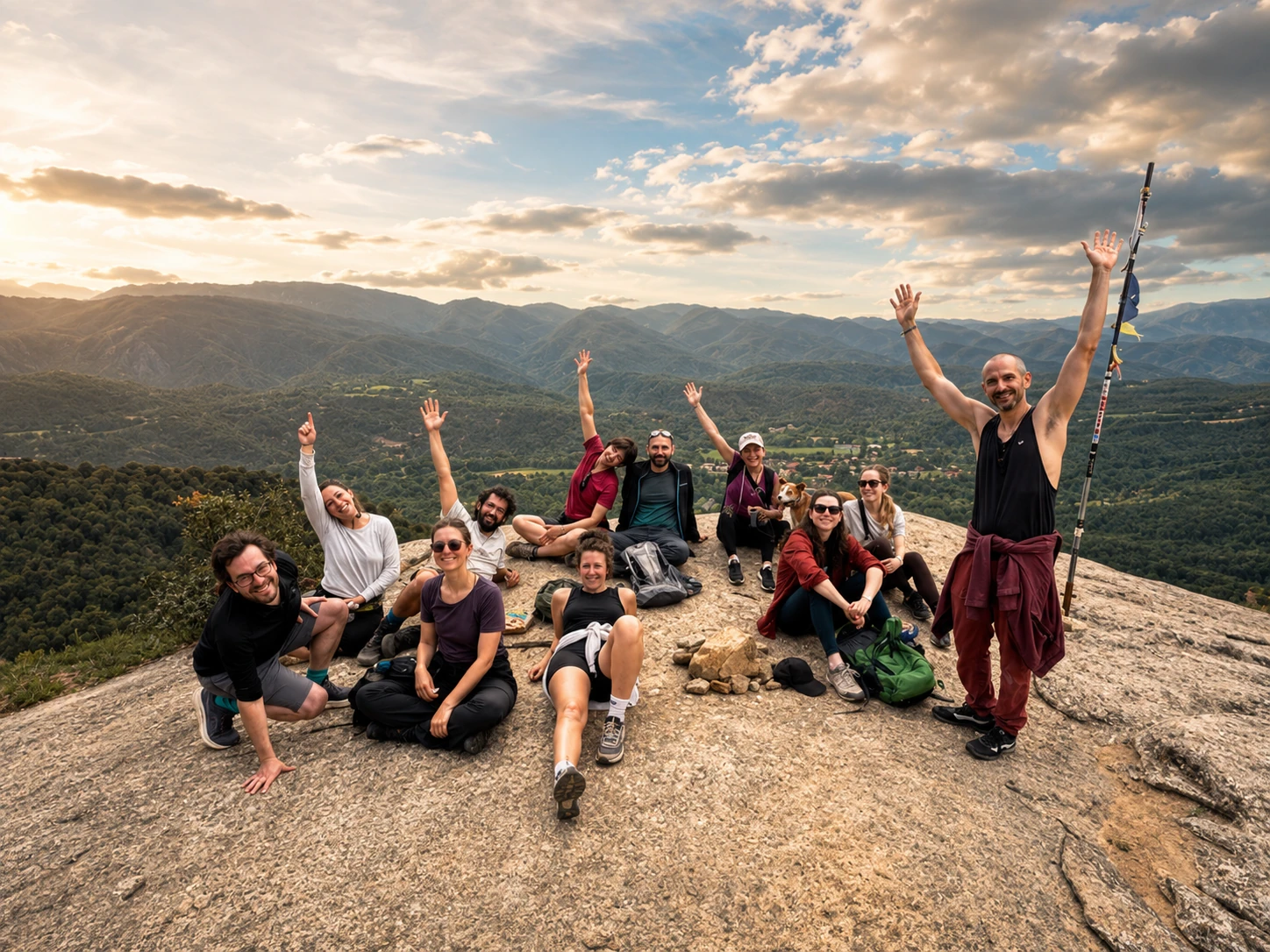
Intentional Community in Spain
From Ecovillages to Coliving, and Everything Between
The phrase "intentional community" has been doing a lot of quiet work in people's daydreams lately. It usually arrives around the third year of living somewhere you do not know your neighbours, working a job that happens through a screen, and feeling a low hum of "surely people are meant to live more together than this."
So let us be useful about it. This is an honest map of what intentional community actually means, the full range of forms it takes, where you find it in Spain specifically, and how to try the idea on without selling everything you own and moving to a mountain. We have skin in this: Wonder House is, depending on how strictly you define the term, a kind of intentional community. We will be honest about where we sit on the spectrum, including the parts where we are not the real deep end.
What "intentional community" actually means
Strip away the romance and the definition is simple. An intentional community is a group of people who choose to live together around shared values and a degree of shared life, on purpose, rather than by the accident of who happens to live on the same street.
That is the whole idea: chosen, not random. Shared values, not just shared walls. Beyond that single thread, the forms vary enormously, and most of the confusion about intentional community comes from people picturing one end of the range and assuming it is the whole thing.
It is an old idea, much older than the word. Ashrams, monasteries, and religious communes have organised life around shared purpose for thousands of years. What feels new is the secular, voluntary, lifestyle version: people with perfectly normal jobs deciding that the default way of living alone-but-near-strangers is not the only option.
The spectrum: commune to coliving
Picture a line. The further along it you go, the deeper the commitment and the more of life you pool. Most people imagine the far end and never realise the near end exists.
Communes sit at the deep end. Shared income, shared property, collective decision-making, often a defining philosophy. You are not visiting; you are joining. Famous examples like Twin Oaks in the United States have run this way for decades. It is a whole-life commitment, and it is not for the curious.
Ecovillages are communes with an environmental spine. Shared land, ecological building, often food self-sufficiency, organised around living lightly. Spain has some of Europe's most established, which we will get to.
Cohousing is the moderate, increasingly mainstream middle. Private homes, but with shared spaces and a shared social contract: common kitchens, shared gardens, regular meals, collective upkeep. You own your front door and you also belong to something. This is the version quietly growing across Europe.
Coliving is the near end, and the most accessible by a distance. Shared house, shared spaces, a chosen group, real connection, but light commitment and a defined length of stay. You are not signing your life over. You are choosing, for a month or a season, to live among people who picked the same thing. It is intentional community with a return ticket.
The important truth this spectrum reveals: you do not have to move to a mountain and pool your salary to taste the thing you are actually craving. The craving is usually for connection, shared meals, and a sense of belonging. You can get a real version of that at the light end without rearranging your entire existence.
Intentional community in Spain: the landscape
Spain turns out to be one of the best places in Europe to find intentional community, across the whole spectrum, for reasons that are half climate and half culture.
At the deep end, Spain has a genuinely storied ecovillage tradition. Reoccupied abandoned villages in the north and remote valleys in the south have hosted established communities for decades: places built on shared land, ecological living, and collective decision-making, some of them now forty years old. They are serious, long-commitment communities, often with formal processes for joining, and they are the real thing for people who want the deep end.
In the middle, cohousing is growing in and around the bigger cities, and Spain's strong tradition of housing cooperatives gives it firm roots. Older-adult cohousing in particular has become a real movement here.
And at the accessible end, Spain has quietly become one of Europe's centres of gravity for coliving, especially the rural kind. The combination of cheap, beautiful, often half-empty countryside, fast fibre internet, and a steady stream of remote workers looking for connection created near-perfect conditions. This is the part of the spectrum we know from the inside, and the part most people researching "intentional community" can actually act on this year.
The cultural half of the explanation matters too. Spain never industrialised its social life out of existence. People still eat long lunches together. The town square is still where the evening happens. Shared, communal, slightly-in-each-others-business living is not a radical experiment here; it is closer to the cultural baseline. Intentional community lands on softer ground in Spain than in places where everyone has spent a generation perfecting the art of not knowing their neighbours.
Where coliving fits, and where it honestly does not
Here is the part most coliving brands will not tell you. Coliving is intentional community at the shallow, accessible end, and that is its strength and its limit.
What it genuinely gives you: a chosen group, shared meals, shared space, real friendships that often outlast the stay, and a felt sense of belonging that hits surprisingly fast. The values are real, the connection is real, and for most people most of the time, that is exactly the dose they were missing.
What it is not: a lifelong commitment, shared income, or a community you build and govern together over decades. If your dream is to co-own land, raise children in a village of chosen family, and make collective decisions about everything for the rest of your life, coliving is a beautiful first taste but not the destination. The deep end exists for a reason, and we will happily point you toward it.
We say this because the honest version is more useful than the marketing version. Matching the depth of community to what you actually want is the whole game. Most people who think they want a commune discover, after a month of real communal living, that what they wanted was connection and shared meals and a few months of belonging, not the dissolution of private property. A few discover the opposite, and go all the way. Both are good outcomes. Guessing wrong is the only bad one.
Is Wonder House an intentional community?
Honestly, sort of, and we like the "sort of."
We are a coliving in a fourteenth century masia in the Catalan countryside, an hour from Barcelona. People come for a month or a season to live and work among a chosen group rather than alone. We share most meals. We cook for each other on themed dinner nights. We have a rhythm, a culture, a set of unspoken values about how people treat each other here, and a strong filter for the kind of human who thrives in it. That is intentional community by the core definition: chosen, shared, on purpose.
What we are not is the deep end, and we are at peace with that. Nobody signs over their income. There is no forty-year commitment. You can leave when your stay ends and many people do, carrying friendships and a slightly rearranged sense of how life could feel. We are the accessible doorway to the idea, the place you find out whether communal living suits you at all. For a lot of people that doorway is the whole answer. For a few, it is the beginning of a longer search, and we cheer them on toward the ecovillages.
If you want to understand the wider why-Spain context, our guide to digital nomad Spain covers the practical side of building a connected life here, and our piece on rural coliving in Spain goes deeper on the countryside version specifically.
How to try intentional community without uprooting your life
The mistake people make is treating it as a binary: keep your isolated life, or burn it down and join a commune. The spectrum is the way out of that.
Start light and short. A month in a coliving tells you more about whether communal living suits your actual personality than a year of reading about ecovillages will. You learn fast whether you are energised or drained by always having people around, whether you love or resent shared meals, whether the loss of total privacy is a price or a relief.
If the light end delights you, go a little deeper. Try a longer cohousing stay, or visit an ecovillage as a guest, which most of the established ones allow. Let the depth of your commitment grow at the speed of your actual experience, not your daydream.
And if the light end turns out to be plenty, that is not a failure. Most people are not looking to leave society. They are looking for a few months a year of living like humans used to, among people they chose, with the door left open. Spain, as it happens, is an unusually good place to do exactly that.
Frequently asked questions
What is an intentional community?
A group of people who choose to live together around shared values and some degree of shared life, on purpose rather than by accident of address. The forms range from full communes and ecovillages at the deep end through cohousing in the middle to coliving at the light, accessible end.
Are there intentional communities in Spain?
Yes, across the whole spectrum. Spain has long-established ecovillages and reoccupied-village communities at the deep end, growing cohousing and housing cooperatives in the middle, and a thriving rural coliving scene at the accessible end, helped by cheap countryside, fast rural fibre, and a culture that never stopped eating lunch together.
Is coliving the same as an intentional community?
Coliving is one form of intentional community, at the light end. It delivers the chosen group, shared space, shared meals, and real belonging, but with a defined length of stay and no lifelong or financial commitment. It is the most accessible way to try communal living.
How do I join an intentional community in Spain?
For the deep end, ecovillages, communes, most have formal visiting and membership processes, so you start as a guest. For the accessible end, you simply book a coliving stay. Trying the light end first is the sanest way to find out which depth actually suits you.
Can I experience intentional community without moving permanently?
Absolutely, and you should before committing to anything bigger. A one-month coliving stay teaches you more about whether shared living fits your personality than any amount of research. Let commitment grow at the speed of experience.
Come find your dose of it
Most people do not need a commune. They need a season of living like people are meant to, among a group they chose, with the door left open. That is what we are.
Wonder House is a rural coliving in the Catalan countryside, an hour from Barcelona, and an easy, honest first taste of intentional community for anyone curious about a more connected way to live. Rooms and dates are on the homepage. Minimum stay is one month, because community, even the light kind, needs that long to become real. WhatsApp is the fastest way to reach a human who can tell you whether you are our kind of people. We usually know within a message or two.