Spain for Digital Nomads: Why Everyone's Here, and Why Most Are Doing It Wrong
May 28, 2026
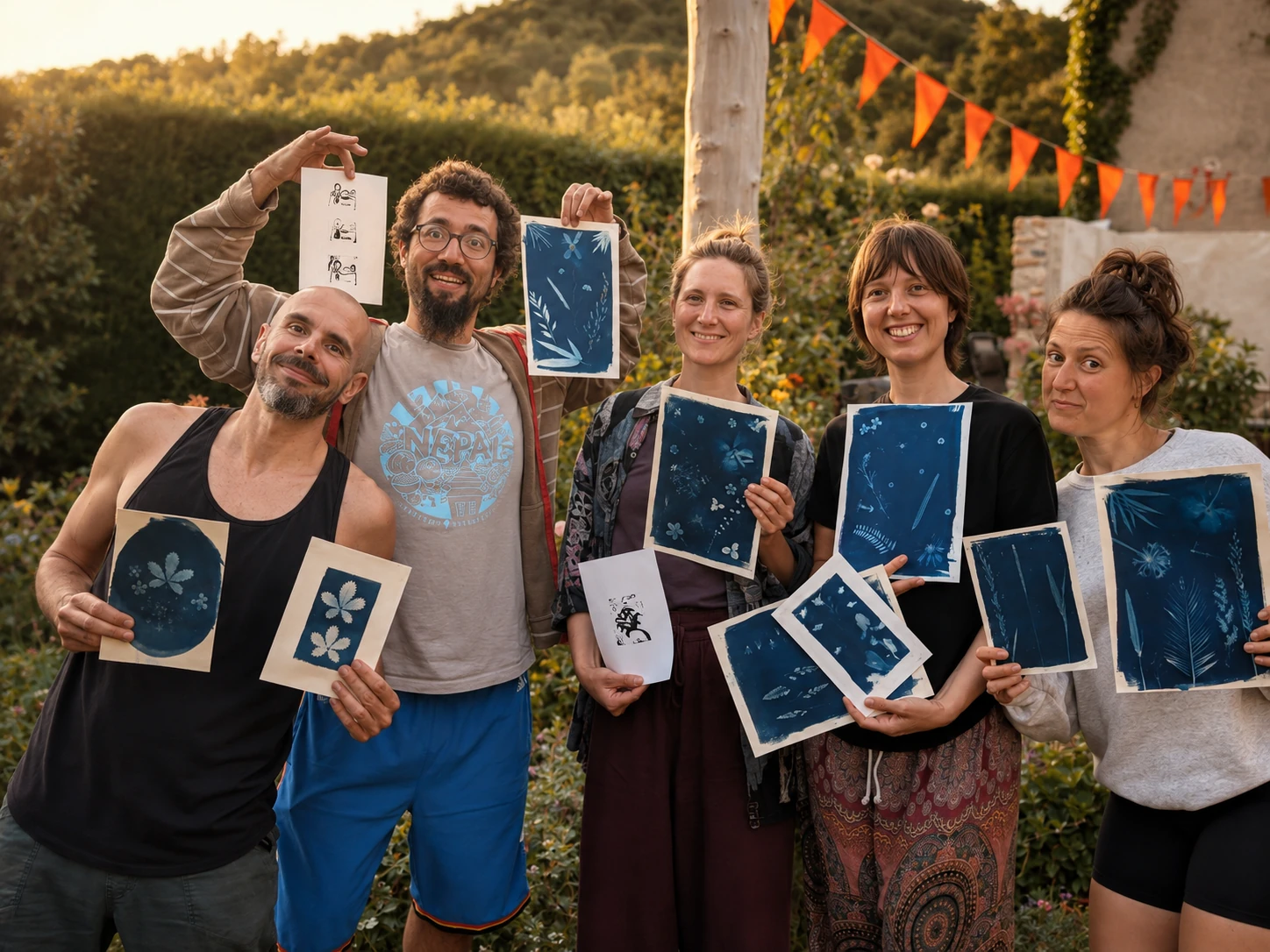
People keep saying Spain is "the digital nomad capital of Europe." That's annoyingly true. Spain has quietly stacked nearly every variable a remote worker actually optimises for — and most of the other contenders haven't.
It's not the visa. Or it's not just the visa. The Digital Nomad Visa that launched at the start of 2023 made the maths cleaner — five years of residence, lower-than-most taxes, family included — and a lot of people who were already going to come anyway used it as their excuse. But the reason they were going to come is older than the paperwork.
Spain delivers a specific bundle that's hard to find anywhere else:
- Weather you can plan a year around. Most of the country sees more than 280 days of sun. A coastal Mediterranean climate makes winter livable for someone arriving from Berlin or Helsinki. The interior and the north have proper four-season variety if you want it.
- Food that's good without being expensive. A €12 lunch can be excellent. Groceries are 30–40% cheaper than London. A glass of decent wine costs less than a coffee in Amsterdam.
- Infrastructure that punches above its reputation. Fibre internet penetration is among the highest in Europe — including in many villages. Trains are fast, frequent, on time. AVE Barcelona–Madrid is 2h 30m and works.
- English-friendly cities, Spanish-rewarding rest. You can survive in Barcelona, Madrid, Valencia, Málaga in English. Step thirty kilometres inland and you'll want some Spanish, which most people end up wanting anyway.
- Healthcare that doesn't bankrupt you. Private insurance is €50–80 a month and covers more than most US plans. Public health, once you're in, is excellent.
- A culture that doesn't moralise about work-life balance because it never had to. People eat lunch at 2pm. Shops close in August. The pace of life is the product.
Then there's the part you only feel after a month: Spain doesn't ask you to perform productivity. Nobody is impressed that you woke up at 5am to grind. Nobody wants to hear about your morning routine. You can build a remarkable working life here without becoming insufferable in the process — which, depending on where you came from, may be the most underrated draw of all.
This is why people land in Spain and don't leave.
The default move: Barcelona, Valencia, Madrid
Almost every digital nomad who arrives in Spain starts in one of these three cities. There are reasons for this and they're not bad ones.
Barcelona is the obvious choice. The skyline is famous, the airport connects to everywhere, English is widely spoken, there's a substantial nomad scene, and you can be on the Mediterranean by lunchtime. If you've never been to Spain before, Barcelona is the city that confirms every romantic preconception you had — and then makes you want to know what the rest of the country looks like.
Valencia is the rising default, and increasingly the new default. It's cheaper than Barcelona, the beach is closer, the food scene is denser than its size suggests, and the city has been deliberately courting remote workers for years. A lot of nomads who got priced out of Barcelona moved here.
Madrid is the answer for nomads whose work runs on European-business-hours intensity rather than coastal-lifestyle slowness. No beach, no view of the Mediterranean, but excellent transport, the best museums in Europe, and a much higher density of professional networks if your work depends on those.
We're not going to argue these are wrong choices. They aren't. They're the path of least resistance, and for plenty of nomads — especially first-trippers, anyone testing whether Spain works for them at all, anyone whose social model is "go out a lot" — the path of least resistance is the right path.
The argument starts at month two.
What nobody tells you after month two in the cities
Roughly six to eight weeks in, the cracks start showing.
Cost has caught up to you. Barcelona's centre is now London-adjacent on rent. A decent one-bed flat in Eixample is €1,400–1,800 if you can find one — and short-term lets aimed at nomads run €1,800–2,400. Valencia is the lower-cost option but it's been climbing fast: what was €700 in 2020 is €1,100–1,300 now. Add coworking (€150–250) and you're at €1,500+ before food. The cities have effectively absorbed the price advantage Spain was selling.
Tourism saturation is real and it has months. Barcelona June through September is unworkable. The metro is full of suitcases. The Gothic Quarter cafés are full of people on holiday. The Sagrada Família neighbourhood is a parking lot of tour groups. Las Fallas in Valencia (mid-March) shuts the city down for a week — fun once, exhausting twice. Madrid in August is the opposite problem: half the city closes because the locals leave.
There's anti-tourist sentiment, and you're not exempt from it. Barcelona has had water-pistol protests against tourists. Anti-Airbnb stickers are on most lampposts in Gràcia. The city is in the middle of an actual policy fight about whether to ban short-term rentals entirely. Locals don't always distinguish between "tourist" and "remote worker who's been here three months" — and frankly, from the outside, it's a fair distinction not to bother making. This isn't a reason to feel guilty about being there. It is a reason to know the air you're breathing.
The nomad bubble closes around you. In a city that hosts thousands of remote workers, you'd expect to meet locals. You won't, much. You'll meet other nomads at the same three coworking spaces, the same two language exchanges, the same Sunday brunch spot. After a month you'll start seeing the same faces. After two months you'll know most of them by sight, none of them by depth. The community is a mile wide and an inch thick — and the actual Spaniards live a layer beneath it you don't have access to.
Productivity quietly degrades. Cities are the entertainment. There's always a market, a party, a friend in town, a rooftop, a new opening. Most weeks you'll get less work done than you planned. Most months you'll get less done than you'd have done in your old apartment in your old city, which was the whole reason you came here.
You're not living in Spain. You're living in an international city that happens to be in Spain. Barcelona has a distinct identity, but the Barcelona a nomad lives in — the cafés, the coworks, the gyms, the Sunday rooftop scene — is interchangeable with the Lisbon, Berlin, Mexico City version of the same. The actual country is somewhere you visit on weekends.
None of this is fatal. People run great nomad lives in Barcelona, Valencia, Madrid for years. But around month two, most of them start asking the same quiet question: is this it?
Spain is bigger than its three cities
Open a map of Spain. Then mentally remove Barcelona, Madrid, Valencia, Sevilla, Bilbao, Málaga, Zaragoza. What's left is roughly 95% of the country, almost none of it on the nomad radar, and almost all of it surprisingly easy to live in.
Catalonia is the clearest example, because it's right next to the city most nomads land in. An hour by train from Plaça Catalunya gets you into the Montseny — a UNESCO biosphere reserve of oak and beech forests, granite mountains, fourteenth-century stone villages, and almost no tourists outside of August weekends. Forty minutes further north sits the Costa Brava interior, with medieval hill towns and beaches that still feel like beaches. The whole zone is fibre-connected, train-connected, and twenty degrees calmer than the city you left.
This is the part most nomads don't know about, because the listicles never write about it. The listicles cover cities, because cities are easy to write about and the writers were never there for more than a week. The country that exists between the cities — the villages, the masías, the small valleys with their own microclimates — is where Spain actually lives. And it turns out you can live there too, with fibre internet, a community of remote workers, and a one-hour train back to Barcelona whenever you want it.
The rural coliving case
The argument for going rural isn't romantic. It's structural. Here's what changes when you stop trying to live nomadically in a city and start living intentionally in a small place.
You get a real community, not a nomad bubble. A coliving house typically holds ten to fifteen people. You eat together. You hike together on Saturday. You know the names of everyone's projects, who's good at editing video, who can fix a wifi router, who's vegetarian, whose girlfriend is visiting next weekend. These are friendships, not Instagram connections — the kind that survive the trip and become couches in eight cities you can crash on next time you're passing through. The depth that's structurally impossible in a city of thousands of strangers happens almost automatically when there are twelve of you in a 14th-century stone house in the middle of a forest.
The cost actually works. All-inclusive rural coliving in Spain typically runs €800–1,400 a month for a private room — internet, utilities, workspace, community, often shared meals included. A comparable city setup, once you've added a studio + coworking + utilities + having to feed yourself, lands at €1,500–2,200. The rural option is cheaper, not more expensive, despite the assumption otherwise.
Productivity comes back. Purpose-built workspaces in quiet houses, with oak forest on the other side of the window, do more for output than every focus app combined. There are no last-minute rooftop invitations. Saturday is for hiking. Tuesday is for working. The structure is the gift.
You actually live in Spain. You buy bread from the village baker. You learn the names of your neighbours' dogs. You go to the Thursday market and the Sunday vermouth tradition and the local fiesta in August. The country stops being something you observe through a Sagrada Família window and becomes the place you actually live. Your Spanish improves because it has to, and it has to because the woman at the post office doesn't speak English and is genuinely kind about it.
The lifestyle resets you. Mornings outside. Sunsets you notice. Real food cooked by people, not assembled by Glovo. Walking instead of taking the metro. Less concrete underfoot. Whatever you came to Spain for that you weren't getting at home — slow, sun, space, depth — happens here in a way the cities can't replicate.
And the cities are still right there. This is the part the listicles miss. Choosing rural Spain doesn't mean choosing isolation. It means choosing a base. The fast train to Barcelona is an hour. You can go to the Picasso Museum and be home for dinner. Friday night drinks in the Gothic Quarter, Saturday morning hike to a 14th-century chapel — that's a normal weekend if you set yourself up correctly.
The rural coliving move is not anti-city. It's pro-having-a-life that includes both, instead of one drowning the other.
What you give up — being honest
This isn't for everyone, and pretending otherwise would be the kind of brochure-writing the rest of this piece exists to avoid.
Nightlife is reduced. If your social model requires Tuesday-night cocktail bars and a different DJ every weekend, rural Spain will feel slow inside a week. The trade-off is real and it's not for everyone.
You need some Spanish. Not fluent, not even good — but functional. Can I have a coffee, where is the train, I'm staying at the house up the hill. The village baker is not going to switch to English for you, nor should she.
You'll need to think about transport. Most rural areas in Spain are accessible by train and bus, but the last mile usually involves a car-share, a bike, or a coliving with a shared vehicle. If you've never driven outside a city, this is a small mental shift.
It's not a first-trip move. This works best for nomads who've already done the Lisbon–Barcelona–Tbilisi–Mexico-City circuit and know what they actually want from a place. If you've never lived abroad on your own, start in a city, give it three months, then consider the rural move. It'll feel like an upgrade rather than a banishment.
Some weeks will feel quiet. This is the entire point, but it can take a beat to get used to if you've been living on stimulus.
If any of the above is a dealbreaker, the cities are right where you left them, and they'll still be there in March.
The framework: rural or city?
The clean version of the decision:
Pick the city if — this is your first nomad trip, you want anonymity and choice, your social model needs nightlife and a constant stream of new people, your work hours align with the city scene, you want to test whether Spain works for you at all without committing.
Pick rural if — you've already done a city stint and the novelty has worn off, you want community over crowds, you value quiet and nature over choice, your work depends on consistent focus, you're willing to travel for the nightlife you actually want, and you're looking to stay long enough to make friendships that matter rather than collect names you'll forget.
Neither is wrong. The mistake is staying in the wrong category by default — staying in the city because it's where you landed, or moving rural before you know what you're moving away from.
What a week looks like in a rural coliving
You wake up around eight. The room is quiet because the room is in a 14th-century stone masía an hour from any motorway. You make coffee in the shared kitchen, talk to whoever else is up, and by 9:30 you're at your desk — yours, in a coworking room designed for it, with fibre internet and a window facing oak forest.
You work until one. Lunch is communal but optional — maybe four of you sit on the terrace with pasta someone made and a bottle of local wine that costs €4. You go back to work until five.
At five there's usually something. A house hike to a viewpoint over the Montseny ridge. A run along an old fire road. A drive into the village for vermut. Twice a week someone leads a yoga session, badly, in the garden. Tuesday is shared dinner — everyone cooks, the result is unhinged and excellent, the conversations run until midnight.
On Saturday you take the train to Barcelona. You go to a market in the Born, you have dinner in a place that doesn't take reservations, you wake up on a friend's sofa in Gràcia and you take the late train home, watching the city give way to fields the moment you hit the suburbs.
By the time you're back at the house on Sunday afternoon, you understand the trick: you've had the best of Barcelona without paying any of its prices, you've had a week of actual work without any of its distractions, and you're sitting on a terrace looking at a mountain that's been there for six hundred million years.
That's the rural coliving week. It's not glamorous. It is — and this is the important word — sustainable. People stay for months because of it.
Frequently asked questions
Is rural Spain's internet reliable? Yes — surprisingly so. Fibre is widely deployed in villages, often faster than what you get in a city Airbnb. A well-set-up coliving will have fibre plus a 4G/5G backup plus, increasingly, Starlink as a third fallback. Internet is no longer the deciding factor.
How do I get around without a car? Train and bus get you between any major city and most regional centres. The last mile from the regional station to a rural coliving is usually handled by a shared house vehicle, a car-share, or a pickup arranged when you arrive. A few weeks in, most people end up renting an electric bike for €15 a day if they want independence.
Won't I feel isolated? Less than you'd feel in a city Airbnb where you live alone and eat takeaway. A coliving holds ten to fifteen people; you're rarely alone unless you want to be. The isolation worry tends to come from people who haven't tried it.
Can I still visit Barcelona or Madrid easily? Yes — that's the structural argument. From Catalonia, an hour by train to Barcelona. From central Spain, AVE makes Madrid a half-day round trip from many rural bases. Weekends in the city, weekdays in the quiet, is the standard pattern.
How long should I stay to feel settled? A month gets you the rhythm. Two months gets you the community. Three months is when the trip turns into a life. Anything less than four weeks is fine for a sampler, but you won't fully unlock the structural benefits — which are the whole point.
Is rural coliving actually cheaper than renting in Barcelona? Usually yes, once everything is included. A €1,000 all-inclusive coliving room is genuinely cheaper than a €1,400 city studio plus €200 coworking plus €100 utilities plus a fridge you have to stock yourself. Run the totals before assuming the city is the budget option.
What are the best months for rural Spain? May, June, September and October are the obvious peak — perfect weather, low tourist pressure. April and November are quieter and still warm enough. December through February are crisp and beautiful inland (cold nights, blue-sky days) and a different kind of magic. July and August are hot but workable if your coliving has shaded outdoor spaces; it's also when the cities are at their worst, so the contrast becomes the point.
Further reading
- Spain Digital Nomad Visa for Americans — the visa, in plain English, with the actual numbers.
- Coliving in Spain: A Practical Guide to Your First Month — what arrival week looks like; what to set up, in what order.
- Rural Coliving in Spain: The Real Thing, Not the Instagram Version — the deeper rural case, with photos and detail.
- Coliving Near Barcelona — the offbeat guide to living one hour out.
- Coliving Near Girona — the Costa Brava corridor.
- Coliving in Montseny — the 14th-century masía, the biosphere reserve, the place.