Cost of Living in Spain vs the US in 2026
August 6, 2026
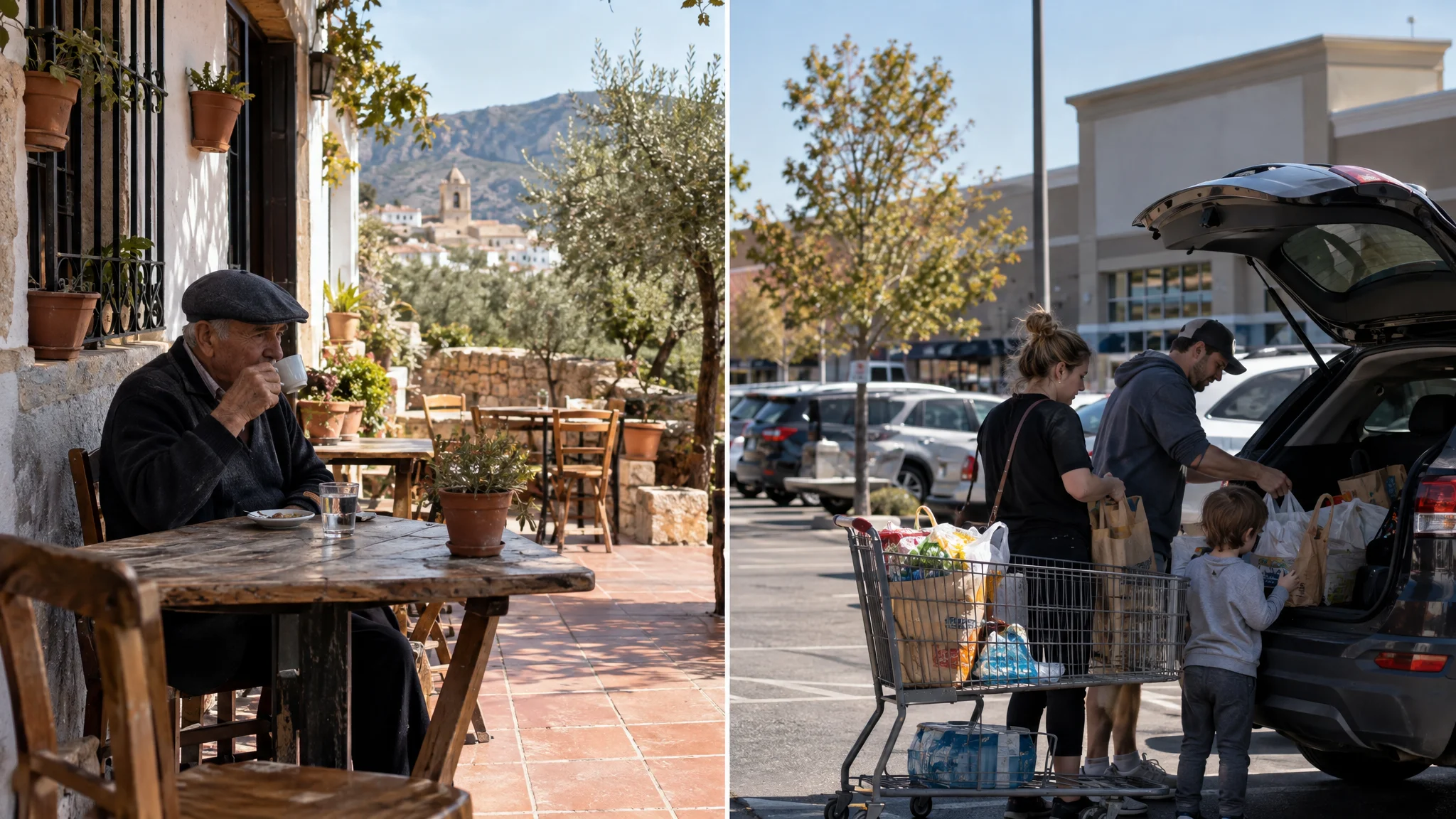
Cost of Living in Spain vs the US, the Honest Comparison
If you are American and doing the maths on moving to Spain, the headline is simple and it is real. Spain is cheaper. Depending on where you live and where you land, roughly 25 to 35 percent cheaper across the board in 2026. But a percentage is a blunt tool, and the interesting part is where the gap is huge, where it almost vanishes, and how the choice between a Spanish city and rural Spain moves the whole comparison again.
We write this from the cheap end of Spain. Wonder House is a fourteenth century masia in the hills an hour outside Barcelona, a coliving of remote workers, plenty of them American, most of whom did this exact calculation before they came. So here is the comparison we walk people through, with the numbers that actually decide it.
The overall gap
Take two similar lives, one in a mid sized US city and one in Spain, and Spain comes in about a quarter to a third cheaper once everything is counted. That is the number most comparison guides settle on for 2026, and it holds up. What it hides is that the saving is not spread evenly. A few categories carry almost all of it, one category runs the other way, and the size of your win depends heavily on which Spain you pick.
Where Spain wins big
Food and eating out. This is the category that shocks Americans first. Groceries run about 30 to 50 percent less than in the US. A single person feeds themselves for 150 to 250 euro a month here against 200 to 400 dollars there. The bigger gap is restaurants. A three course menu del día lunch is 12 to 15 euro in Spain, against 25 to 30 dollars for the equivalent in the US once tip and tax are added. A mid range dinner for two is 45 to 55 euro here, 80 to 120 dollars in a major US city. Coffee is 1.60 to 1.80 euro against 4 to 6 dollars. None of these are small differences, and they repeat every single day.
Healthcare. The one that changes lives. Private health insurance in Spain runs about 50 to 150 euro a month for an individual and covers more than most people expect, and the public system is genuinely excellent once you are in it. Set that against American premiums, deductibles and surprise bills and the comparison stops being a percentage and starts being a different category of existence.
The daily services. Haircuts, a massage, a cleaner, a repair. Lower labour costs and no tipping culture make all of it markedly cheaper, and it adds up quietly over a year.
Where the gap narrows or flips
Honesty is the point of this piece, so here is the other side.
Fuel. Petrol is the clear US win, often around half the Spanish price. Spain runs near 6.55 dollars a gallon equivalent, the US closer to 3. If your American life was built around a car, part of your saving elsewhere goes back into the tank, unless you move somewhere you do not need to drive daily.
Big city rent. Rent in central Barcelona or Madrid, at 1,250 to 1,550 euro for a one bedroom, is cheaper than New York or San Francisco but not dramatically below a lot of mid tier US cities. If you compare the most expensive Spain to the average US, the housing win shrinks. Which is exactly where the next section comes in.
The lever Americans miss, city vs rural
Most people run this comparison as US city against Spanish city, and they still come out ahead. But that is not the biggest version of the win, because it prices the most expensive Spain against the average America.
Flip to rural Spain and the gap opens back up. A one bedroom in a small Spanish city is 450 to 600 euro. A room in a rural coliving, all in with utilities, fast internet and a workspace, runs 800 to 1,400 euro, and here at Wonder House starts from 750. Compare that to what you were paying for rent alone in the US and the monthly saving stops being a percentage and becomes a plane ticket, or an extra month of runway, or the reason the move is possible at all.
And the rural version quietly wins the fuel argument too. When your workspace is downstairs, the market is in the village, and the train handles Barcelona, the car you were burning 6 dollar fuel in becomes optional. The one category where the US was cheaper stops applying to you.
There is a lifestyle line under the money one, and it belongs in an honest comparison. The thing a lot of Americans are actually buying when they move is not just a lower number. It is lunch at 2pm that nobody apologises for, a culture that never learned to moralise about work, and a Tuesday that ends on a terrace instead of in traffic. Rural Spain sells that at the lowest price in the whole comparison, with Barcelona kept an hour away on a train for the weekends you want it.
So is Spain cheaper than the US
Yes, clearly, in 2026. Call it a quarter to a third less for a comparable life, driven mostly by food, healthcare and services, with fuel as the honest exception and big city rent as the place the gap narrows. Choose a Spanish city and you win. Choose rural Spain and you win by a lot more, and arguably get the better life while you are at it.
The move is not really a question of whether Spain is cheaper. It is a question of which Spain you compare, and the widest, truest version of the saving is the one an hour outside the city, not inside it.
Frequently asked questions
Is the cost of living in Spain cheaper than the US in 2026? Yes. A comparable life runs roughly 25 to 35 percent cheaper overall, led by food, healthcare and personal services. Fuel is the main thing that is cheaper in the US, and top tier city rent is where the gap is smallest.
How much cheaper is food in Spain than the US? Groceries are about 30 to 50 percent less. Eating out is the bigger gap, a menu del día lunch at 12 to 15 euro against 25 to 30 dollars in the US, and coffee at under 2 euro against 4 to 6 dollars.
What about healthcare costs in Spain vs the US? Dramatically lower in Spain. Private insurance is roughly 50 to 150 euro a month for an individual with broad coverage, and the public system is strong. For many Americans this single category justifies the move.
Is anything more expensive in Spain than the US? Fuel, most clearly, often around double the US price. Some imported and electronic goods too. If your life depends on daily driving, budget for that, or base somewhere you do not need to.
Does living rurally in Spain save an American even more? Yes. Small city rent of 450 to 600 euro, or a rural coliving from 750 all in, widens the gap against US housing, and cuts the fuel disadvantage because you drive far less. It is the cheapest version of the whole comparison.
Further reading
- Cost of living in Spain, the full national breakdown.
- Cost of living in Barcelona, the city numbers in detail.
- Spain digital nomad visa for Americans, the paperwork side of the move.
- Spain for digital nomads, why so many people go past the cities.
- Rural coliving in Spain, the cheapest and, we would argue, the best version.