Is Spain a Good Place to Live in 2026, an Honest Answer
November 12, 2026
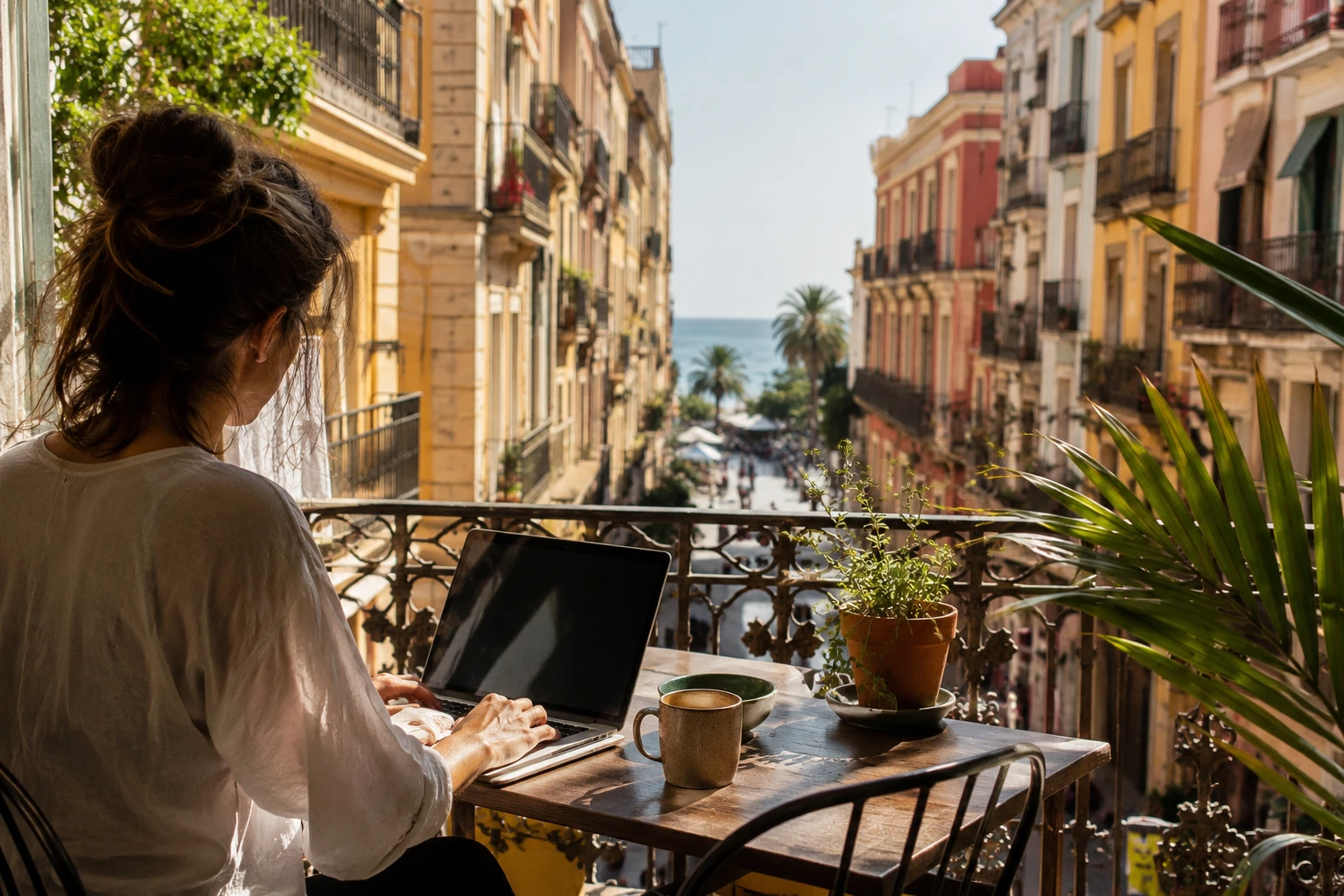
Is Spain a good place to live? For a lot of people it is one of the best places on earth, and for a few it is a slow source of frustration, and the honest answer depends entirely on what you want and which Spain you choose. Most articles answer this with a wall of sunshine and a property advert. We are going to give you the yes and the no, because both are real and you deserve to know which one is yours before you move.
We are not guessing. We run a coliving house in a fourteenth century masia in the Montseny, an hour north of Barcelona, nine rooms, up to twenty two amazing humans, fibre in the stone walls and oak forest out the window. People arrive from all over the world every month to try living here, and we get to watch, close up, who blooms and who bounces. This is the view from that terrace.
The short answer
Yes, for most people who can earn remotely or do not depend on a Spanish salary, Spain is a genuinely excellent place to live. The quality of daily life per euro spent is hard to beat anywhere in Europe. It is a weaker fit if you need a high local income, zero bureaucracy, or total predictability, because Spain is generous with life and stingy with speed.
Hold both of those in your head and the rest of this is just detail that tells you which side of the line you land on.
What Spain genuinely gets right
Start with the reasons the yes is so strong, because they are not marketing, they are structural.
The daily life is the product. People eat lunch at 2pm, linger over it, and treat the pace as the point rather than a problem to optimise. The weather backs it up, more than 280 days of sun across most of the country. The food is good without being expensive, a three course lunch for 12 to 15 euro and honest local wine that costs less than a coffee. Healthcare does not bankrupt you, with private cover from about 50 to 150 euro a month on top of a public system that is genuinely excellent once you are in it. The infrastructure punches above its reputation, fibre in villages and fast trains that turn up on time. And it is safe, sociable and unhurried in a way that quietly lowers your blood pressure over the first few months.
For someone whose income arrives from elsewhere, this adds up to a life that feels richer and costs less, which is exactly the trade most people are hoping for when they ask the question.
The catch nobody puts in the brochure
Now the honest no, because every real place has one.
The bureaucracy is slow and fond of paper. Simple things, a residence card, a utility transfer, a tax registration, take more appointments and more patience than you expect, and a sense of humour helps more than fluent Spanish does. Local salaries are low, so if you need to earn from a Spanish job rather than bring your income with you, the maths gets much tighter and this is a different and harder move. The language matters more the better the place, because the cheapest and most beautiful corners of Spain run on Spanish, not English. And the summer in the interior and the south is genuinely hot, August half closes the country, and some people love that and some quietly wilt.
None of these is a dealbreaker on its own. Together they are the reason the honest answer is a yes with conditions rather than a postcard.
Who Spain is a great place to live for
Spain suits a specific and growing set of people almost perfectly.
It is excellent for remote workers and digital nomads who bring their income and spend it here, because they get the whole upside and sidestep the low local wages. It is excellent for anyone who values time, food, weather and community over speed, status and a big paycheck. And it is excellent for people willing to learn some Spanish and choose their region on purpose, because that unlocks the cheaper, deeper, better version of the country that the tourists never reach.
It is a weaker fit for someone who must earn locally in a high paying field, who needs fast and frictionless admin, or who wants an all English bubble forever, which exists in the big cities but slowly starts to feel like living beside Spain rather than in it.
The part most people get wrong
Here is the thing that decides more happiness than any of the above. Spain is not one place, and the version you choose does most of the work. The same month costs 2,200 euro in central Barcelona and 1,100 euro in a stone village an hour away, and the person in the village is often happier, not poorer, because they traded a crowd for a community and a studio for a life. We lay the options out honestly, cities and coast and the rural in between, in our guide to the best places to live in Spain.
The common mistake is to answer is Spain a good place to live by moving to the most expensive, most crowded version of it by default, paying top prices for the one Spain that is not actually cheaper than home, and then wondering why it did not feel like the brochure. The better version is usually quieter and an hour out. If you want to know what the day to day actually feels like once the novelty wears off, we wrote that up in living in Spain, and if you are weighing the move itself, start with the two decisions in moving to Spain.
So, is it a good place to live for you
If your income travels, if you value a slow good life over a fast expensive one, and if you are willing to learn a little Spanish and pick your corner with intention, then yes, Spain is one of the best places you could live in 2026, and most people who do it this way never seriously consider leaving. If you need a high local salary and hate paperwork, be honest with yourself, because the sun does not pay the bills and the forms will test your patience.
The quietest and, we would argue, the best version of the yes is a community in the countryside with a great city one train ride away. That is what rural coliving in Spain is, and it is what we do here. The house is here and the door is open.
Frequently asked questions
Is Spain a good place to live in 2026? For most people who earn remotely or bring their own income, yes, it is one of the best in Europe for quality of daily life per euro. It is a weaker fit if you need a high local salary or zero bureaucracy. The single biggest factor in whether you are happy is which region you choose, not the country itself.
What are the downsides of living in Spain? Slow paperwork, low local salaries, real summer heat in the interior and south, and the fact that the cheapest and most beautiful places run on Spanish rather than English. None is fatal, but together they turn the answer into a yes with conditions rather than an unqualified one.
Is Spain a good place to live for Americans and other foreigners? Yes, especially for remote workers who keep their income from home and spend it in Spain, which sidesteps the low local wages entirely. The Digital Nomad Visa introduced in 2023 made the residence route workable, and the lower cost of living stretches a foreign income a long way.
Is it expensive to live in Spain? Much less than most of western Europe or the US, with the important caveat that central Barcelona and Madrid are the exception. A single person lives comfortably on 1,300 to 2,200 euro a month all in, and the rural end of that range buys a noticeably better life than the urban top of it.
Where is the best place to live in Spain? There is no single answer, it depends on whether you want a city, the coast, or the rural in between. Many remote workers find the sweet spot is a smaller town or a rural community within an hour of a major city, which combines a low cost and a real community with easy access to everything a city offers.
Further reading
If the answer is leaning yes, here is where to go next.
- Moving to Spain, the two decisions that decide whether the move works.
- Best places to live in Spain, the honest map, cities, coast and rural.
- Living in Spain, what the day to day actually feels like once the novelty settles.
- Cost of living in Spain, the honest numbers, and why the rural version is cheaper.
- Rural coliving in Spain, the quiet version of the yes, an hour from the city.