Living in Spain, What It Is Actually Like
August 14, 2026
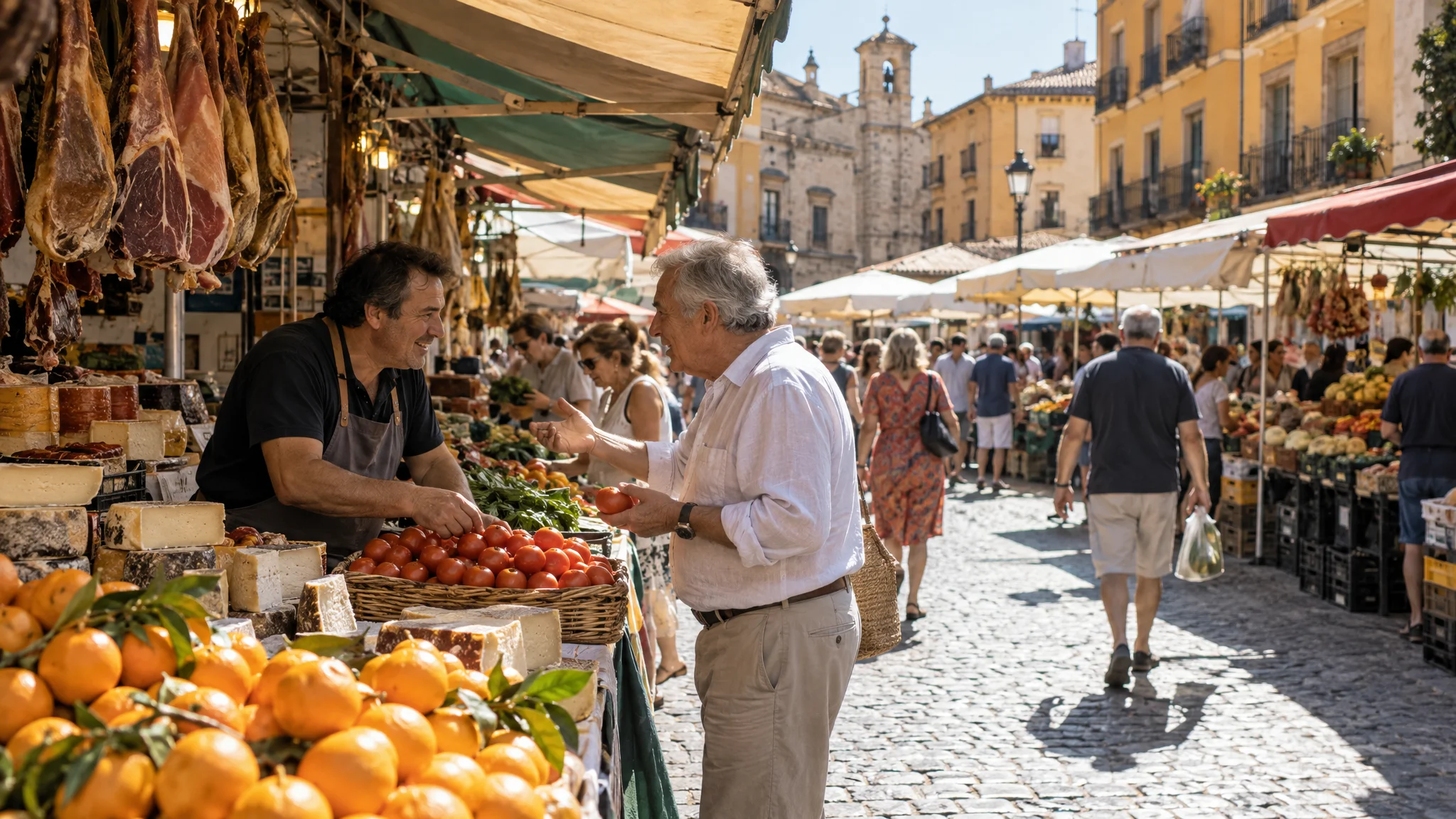
Visiting Spain and living in Spain are two different countries that happen to share a flag. The holiday is the sangria and the Sagrada Família. The life is the town hall queue, the 2pm lunch that eats your afternoon, the neighbour who now expects a hello, and the slow realisation that you are calmer than you were and you cannot quite say when it happened.
We see both versions from the house. We run a coliving in a fourteenth century masia in the Montseny, one hour from Barcelona by train, ten rooms and twelve to fifteen amazing humans, fibre in the walls and oak forest out the window. People move in expecting the holiday and stay for the life. This is the honest account of what living in Spain actually feels like once the novelty settles, the good and the genuinely annoying, so you know what you are choosing.
The daily rhythm takes a month to click
Spain runs on a clock that will feel wrong for about four weeks and then feel like the only sane way to organise a day.
Lunch is the main meal and it happens at 2pm, long and unhurried, often the social centre of the day rather than a sandwich at a desk. Dinner is late, 9pm or later, and nobody thinks that is strange. The famous siesta is mostly a myth in the cities now, but smaller shops really do close in the early afternoon, and the whole country slows in a way that punishes anyone trying to force a northern European schedule onto it. Fight the rhythm and Spain feels inefficient. Join it and you discover the pace was the point. People here treat the evening as something to live in, not to survive until bed.
The food is the quiet daily luxury
The thing that surprises new arrivals is not a famous restaurant. It is how good ordinary life tastes.
The menu del día, a three course lunch with a drink, is still 12 to 15 euro in most of the country, and it is often excellent. A coffee is 1.60 to 1.80 euro. A glass of honest local wine costs less than that coffee in a lot of places. Groceries for one person run about 200 to 300 euro a month, and the markets are full of produce that actually tastes of something. You stop treating eating well as a treat and start treating it as the baseline, which is a small thing that quietly reshapes your whole month. Out here at the house, Tuesday dinner is everyone cooking together and a four euro bottle of wine, and it beats most restaurants we can think of.
The admin is real, and it is survivable
Nobody should sell you Spain without mentioning the paperwork, because the bureaucracy is genuine and it has a rhythm of its own.
You will get an NIE number, register your address at the town hall in a step called empadronamiento, sort health cover and open a bank account, and each of those will involve a queue, a form you did not know about, and at least one visit that achieves nothing. The trick is to treat it as a slow background process rather than an emergency, bring more documents than you think you need, and accept that the answer today may differ from the answer yesterday. It frustrates everyone and it stops almost nobody. We break the whole sequence down in how to move to Spain so you can do it in the right order.
Healthcare is better than you expect
Healthcare is the part that quietly reassures people once they understand it.
Most newcomers carry private insurance, which runs about 50 to 150 euro a month for an individual and covers far more than that number suggests, with short waits and English speaking doctors in the cities. The public system, once you are entitled to it, is genuinely excellent and close to free at the point of use. Coming from a country where a medical problem is also a financial one, this lands as a kind of relief that is hard to describe until you have felt it.
You will want some Spanish, and you will get it
You can survive in Barcelona, Valencia, Madrid and Málaga in English. Step thirty kilometres inland and you will want some functional Spanish, which most people end up wanting anyway.
Living in Spain long term without any of the language keeps you a permanent visitor, sealed inside an English speaking bubble that floats above the actual country. You do not need to be fluent. You need enough to order, to ask directions, to tell the woman at the post office you are staying at the house up the hill, and she will be genuinely kind about the rest. In the towns and villages where life is cheapest and warmest, the language is not a tax on living there. It is the door in.
The friendships depend entirely on your setup
This is the part that decides whether living in Spain feels rich or lonely, and it has almost nothing to do with the country and everything to do with how you live in it.
Move into a city flat alone and you can go weeks meeting only other newcomers at the same three coworking spaces, a community a mile wide and an inch thick. Move into a community and the opposite happens almost automatically. In a coliving house of a dozen people you eat together, hike together on Saturday, and know the names of everyone's projects within a week. These become the friendships that survive the trip and turn into couches in eight cities you can crash on next time you pass through. The loneliness people warn about living abroad is real, but it is a setup problem, not a Spain problem, and it is solvable on day one.
The seasons are not all sunshine, and that is fine
The brochure sells 280 days of sun and it is mostly true, but living here means meeting the rest of the calendar too.
The interior gets properly cold in winter, crisp blue sky days and cold nights that are their own kind of magic. July and August are hot, and in the cities they are the worst months, airless and full of visitors, which is exactly when the countryside with its shade and its river and its forest becomes the point. Spring and autumn are close to perfect almost everywhere. Living here, rather than holidaying, means you get the full year, and the full year is better than the postcard because it actually changes.
So what is living in Spain really like
Slower than home, cheaper than you feared, warmer in more than one sense, and heavier on paperwork than anyone admits. The daily luxuries are small and constant, good food, cheap wine, sun you can rely on, healthcare that does not frighten you. The friendships are as good as your setup allows. And the pace, once you stop fighting it, does something to your nervous system that most people did not know they were missing until it arrived.
The version of this life that goes furthest, in money and in depth, is the one an hour outside the city rather than inside it. That is the version we live and the one rural coliving in Spain is built around. If you want to see it before you commit to a lease anywhere, the house is here.
Frequently asked questions
What is living in Spain actually like day to day?
Slower and more social than most newcomers are used to. Lunch at 2pm, dinner after 9pm, long meals, cheap good food, reliable sun and a general refusal to treat busyness as a virtue. It takes about a month to stop fighting the rhythm and start enjoying it.
Is living in Spain cheaper than northern Europe or the US?
Almost always, especially outside the big city centres. Food, wine, transport and healthcare are inexpensive nationwide, so your total cost is mostly decided by rent. A rural or small city base keeps a comfortable life around 1,300 to 1,600 euro a month all in.
Do I need to speak Spanish to live in Spain?
Not to survive in the big cities, yes to actually belong anywhere smaller. Functional Spanish, not fluency, is enough to move from permanent visitor to resident. Most people who stay end up wanting the language regardless.
Is the bureaucracy in Spain really that bad?
It is slow and repetitive rather than impossible. Expect queues, forms and the occasional wasted visit for your NIE, town hall registration, healthcare and bank account. Treat it as a background process, over prepare your documents, and it resolves. It stops very few people who genuinely want to be here.
Is it lonely living in Spain as a foreigner?
It can be if you live alone in a city and meet only other newcomers. It rarely is if you choose a community setup like a coliving, where shared meals and shared weekends build real friendships fast. Loneliness abroad is usually a setup problem, not a country problem.
Further reading
Once you know what the life feels like, plan the move.
- Moving to Spain, the honest overview and the decisions that matter most.
- How to move to Spain, the paperwork in plain language and the right order.
- Cost of living in Spain, the real numbers, rural against urban.
- Best places to live in Spain, the honest map of where to base yourself.
- Spain for digital nomads, the case for going past the cities.