Moving to Spain in 2026, the Honest Version
August 14, 2026
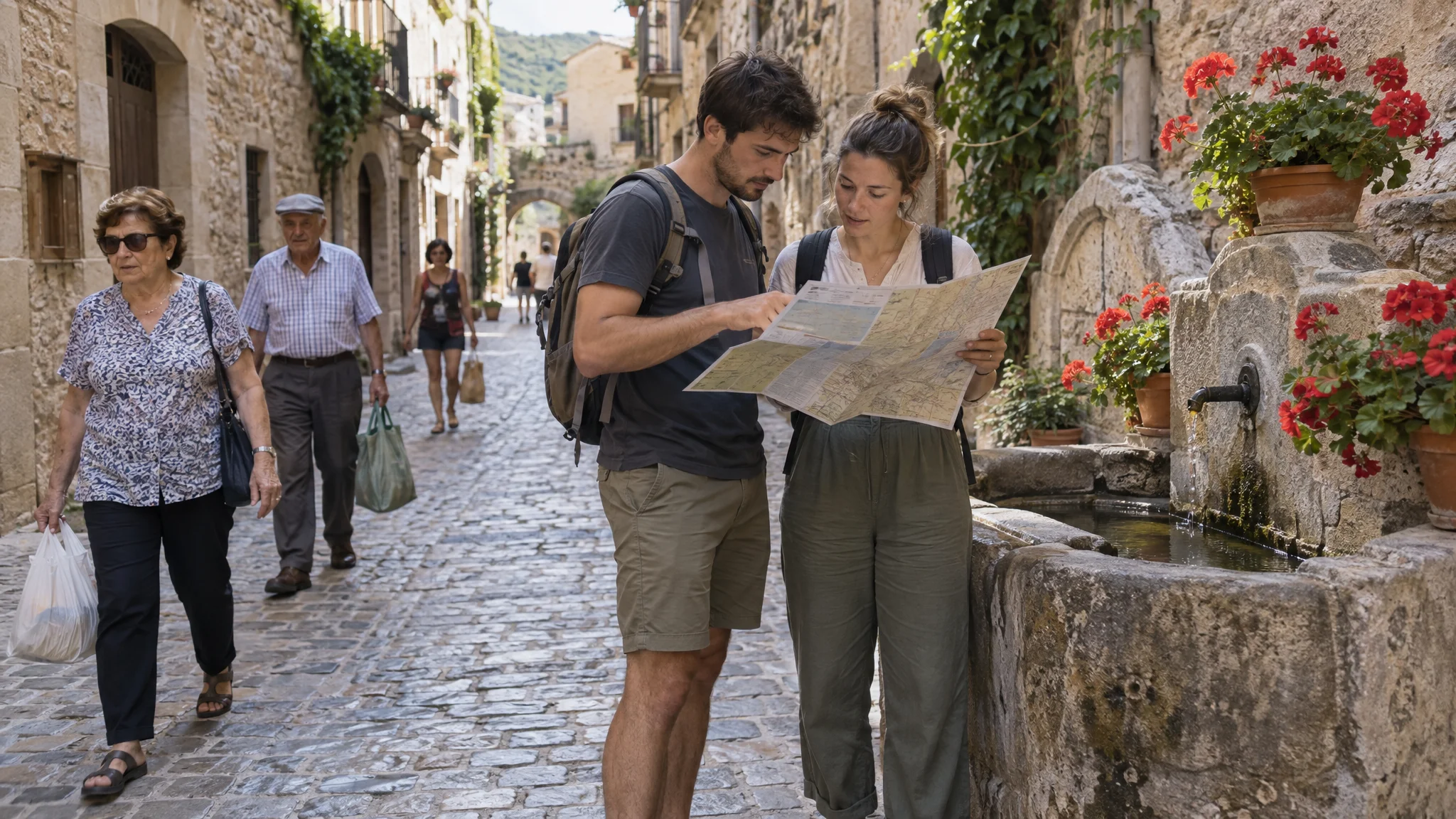
Most guides about moving to Spain read like a brochure for a country that does not quite exist. Endless sun, cheap wine, a balcony over the sea, all of it for the price of a coffee. Some of that is true. The part they leave out is that Spain is not one place, and the version you move to decides almost everything about whether the move works.
We know this from the inside. We run a coliving house in one of the quieter versions of Spain. A fourteenth century masia in the Montseny, ten rooms, twelve to fifteen amazing humans, one hour from Barcelona by train, fibre in the walls and oak forest out the window. People arrive here every month, most of them straight from a city they thought was the only option, and you can watch the map of the country redraw itself in their heads. This is the honest overview, written from that terrace, of what moving to Spain really involves and how to do it without paying for a mistake you did not need to make.
Why everyone is moving to Spain
Spain has quietly stacked nearly every variable a person actually optimises for when they leave home, and most of the other contenders have not.
The weather you can plan a year around, more than 280 days of sun across most of the country. Food that is good without being expensive, a three course lunch for 12 to 15 euro and a glass of honest local wine that costs less than a coffee. Infrastructure that punches above its reputation, with fibre internet in villages and fast trains that turn up on time. Healthcare that does not bankrupt you, private cover from about 50 to 150 euro a month and a public system that is genuinely excellent once you are in it. And a culture that never learned to moralise about work, because people here eat lunch at 2pm, close the shops in August, and treat the pace of life as the product rather than a problem to fix.
That bundle is the real reason people are moving to Spain. The visa made the maths cleaner. The life is what makes them stay.
The two questions that actually decide your move
Almost everyone arrives worrying about paperwork. The paperwork matters, and we get to it, but it is not what decides whether you are happy here. Two other questions do.
The first is which Spain. The same month costs 2,200 euro in the middle of Barcelona and 1,100 euro in a stone village an hour away, and both people are technically living in the same country. Choosing your Spain is the single biggest lever you have, bigger than your salary and much bigger than your visa. We wrote a full guide to the best places to live in Spain for exactly this decision, cities and coast and the rural in between, with the trade offs laid out honestly.
The second is how you want to live once you are here. Alone in a flat, anonymous and free. Or inside a community, with a workspace and a shared dinner table and people who know the name of your project. There is no correct answer, but there is a version that suits you, and the mistake is drifting into the wrong one by accident. Our guide to living in Spain walks through what the day to day actually feels like, the rhythm, the food, the admin, the friendships, so you can picture your version before you commit to it.
Get these two right and the move works even if the paperwork is slow. Get them wrong and no amount of good weather fixes it.
What it costs to move, and to stay
The move itself is cheaper than people fear and the staying is cheaper than the cities suggest.
For 2026, a single person lives comfortably in Spain on somewhere between 1,300 and 2,200 euro a month, everything in. The spread is almost entirely about where you land. Central Barcelona or Madrid pushes you toward the top before you buy a single coffee. A smaller city, a town, or a rural coliving sits you near the bottom with money left over. Rent is the number that moves everything else, and everything that is not rent, the food and wine and healthcare and transport, is inexpensive almost everywhere in the country.
We put the full breakdown, rural against urban, in our guide to the cost of living in Spain. The short version is that the countryside is the budget option, not the splurge, once you count everything a bare city studio quietly leaves out.
The paperwork, in one honest paragraph
Here is the part the forums make sound worse than it is. If you are from outside the EU you will most likely come on the Digital Nomad Visa that launched in 2023, which gives remote workers a residence route, a friendlier tax rate, and the option to bring family. You will get an NIE number, register your address at the town hall, sort private health cover, and open a Spanish bank account, roughly in that order. It is a few months of forms, not a wall. We laid out the whole sequence, in plain language and the right order, in how to move to Spain, and the money and tax specifics for Americans in particular in our guide to the Spain digital nomad visa for Americans. None of this is legal advice, and the thresholds move, so confirm the current numbers before you file. But do not let the admin be the thing that stops you. It stops almost nobody who actually wants to come.
City or country, the choice nobody frames for you
Almost every person moving to Spain starts in Barcelona, Valencia or Madrid, and those are not bad choices. They are the path of least resistance, and for a first move, for anyone testing whether Spain works at all, the path of least resistance is often the right one.
The argument starts at month two. The cost catches up with you, the city rent absorbs the price advantage Spain was selling, and the nomad bubble closes around you, a mile wide and an inch thick. You start to notice you are not living in Spain so much as living in an international city that happens to be in Spain, with the actual country somewhere you visit on weekends.
This is where the rural version earns its case, and it is a structural case, not a romantic one. Base yourself an hour out and you get a real community instead of a crowd, a budget that works, focus that comes back the moment the rooftop invitations stop, and a country you actually live in rather than observe. You do not lose the city either. The fast train to Barcelona is there whenever you want the museum, the dinner, the Friday night in the Gothic Quarter. You just stop paying Barcelona rent to sleep near it. If that is the version that speaks to you, that is the whole reason rural coliving in Spain exists, and it is what we do here at the house.
So how should you move to Spain
Decide which Spain before you book anything, because the postcode does more damage to your budget and your focus than any other choice. Pick how you want to live, community or solitude, on purpose rather than by default. Start the paperwork early and treat it as a few slow months rather than a barrier. And keep the difference the rural version saves you, because for a lot of people that difference is the flight home twice a year, or the extra month they get to stay because the runway lasted.
The mistake is not choosing the city. The mistake is paying city prices by accident, because it was where you happened to land, when a cheaper and frankly better version was one train ride away the whole time.
If you want to come see the quiet version for yourself, the house is here and the door is open.
Frequently asked questions
Is moving to Spain a good idea in 2026?
For most remote workers, yes. Spain combines cheap good food, strong internet, affordable healthcare and a slower pace that few other countries match. The people who regret it usually did not choose their region or their living setup on purpose, and paid top tier city prices by accident. Choose both deliberately and the move tends to work.
How much money do I need to move to Spain?
Budget between 1,300 and 2,200 euro a month to live once you are here, plus a few months of savings as a buffer while paperwork settles. The low end is a smaller city or a rural coliving, the high end is central Barcelona or Madrid. Rent is the variable that decides where in that range you land.
Do I need a visa to move to Spain?
EU citizens do not. Everyone else usually does, and for remote workers the Digital Nomad Visa introduced in 2023 is the common route, offering residence, a friendlier tax rate and the option to include family. Thresholds change, so confirm the current requirements before applying.
Where is the cheapest place to live in Spain?
Small cities and rural towns, not the famous coastlines. A rural coliving that folds rent, utilities, fast internet and a workspace into one price from around 750 to 1,400 euro is often cheaper than a bare studio in Barcelona once you add back everything the studio does not include.
Can I move to Spain without speaking Spanish?
You can arrive in the big cities on English alone. In the towns and villages where life is cheapest and slowest you will want some functional Spanish, which most people end up wanting anyway. It is a feature of the better version of Spain, not a tax on it.
Further reading
Start with the two decisions, then the money, then the forms.
- Best places to live in Spain, the honest map, cities, coast and the rural in between.
- Living in Spain, what the day to day actually feels like once the novelty settles.
- How to move to Spain, the paperwork in plain language and the right order.
- Cost of living in Spain, the honest numbers, and why the rural version is the cheaper one.
- Spain for digital nomads, the bigger case for going past the cities.
- Rural coliving in Spain, the real thing, not the Instagram version.